Say Sorry
Acknowledge the customer’s frustration and respond with genuine empathy.
A practical five-step method for customer issues
The SAPAC Method gives customer-facing teams five practical steps for understanding an issue, finding the best outcome the circumstances allow, and following through. The same principles also work in leadership, workplace, and personal conversations.
When a problem tests trust, your response can change the relationship.
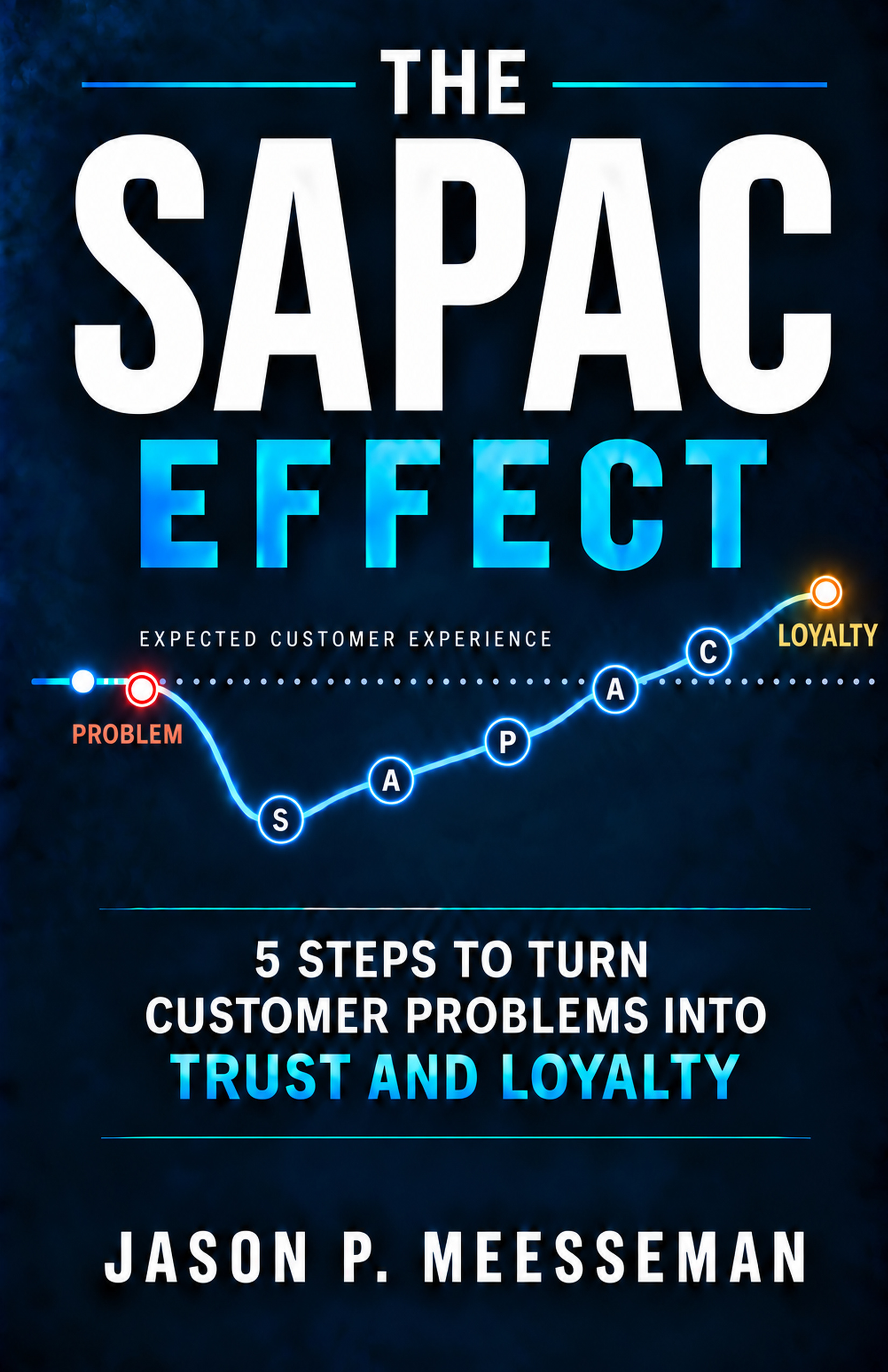
Trusted voices. A practical method for the moments that shape customer relationships.
The SAPAC Effect offers a practical framework for turning difficult conversations into opportunities to build trust and strengthen relationships.
Its strength lies in turning the fundamentals of empathy, listening, problem-solving, and follow-through into a memorable process that leaders and teams can put into practice when it matters most.
Problems are inevitable. What people remember is how they were treated when something went wrong.
Handled with empathy, clear communication, and follow-through, a difficult moment can do more than resolve an issue. It can restore confidence—and sometimes leave the relationship stronger than before.
See the SAPAC EffectSAPAC is a practical checklist for staying intentional when emotions rise and the next step is not obvious.
Acknowledge the customer’s frustration and respond with genuine empathy.
Restate the problem, ask questions, and listen until full understanding.
Consider reasonable solutions, attack the problem, focus on resolution, and avoid blame.
Confirm the plan, set clear expectations, and escalate when necessary.
Confirm the solution was completed, communicate the resolution, and follow up with the customer.
Together, these five steps comprise SAPAC. SAPAC provides a dependable path for users to follow when pressure and emotion make clear thinking more difficult.
Explore how a thoughtful response can turn a difficult customer experience into trust and loyalty.
Passages from The SAPAC Effect by Jason P. Meesseman.
“A customer problem handled well may actually strengthen trust and build loyalty. That is the SAPAC Effect.”
Jason P. Meesseman · The SAPAC Effect
“Trust is not built only through promises. Trust is built when people see how we respond under pressure.”
Jason P. Meesseman · The SAPAC Effect
“The SAPAC Method is not about defeating the customer. It is about finding the best possible outcome for everyone involved.”
Jason P. Meesseman · The SAPAC Effect
A TOOL YOU CAN USE
The SAPAC Effect: 5 Steps to Turn Customer Problems into Trust and Loyalty draws on real experiences—including lessons learned from the author’s own mistakes—to make a difficult part of customer service easier to navigate.
For leaders, managers, and customer-facing professionals, the book offers a memorable way to listen, solve problems together, and follow through.

SAPAC can be taught, practiced, and used in the moments that shape customer relationships. Bring the method to a leadership meeting, team training, or industry event.
Ask about speaking & trainingFor speaking, workshops, and team training inquiries.